
News




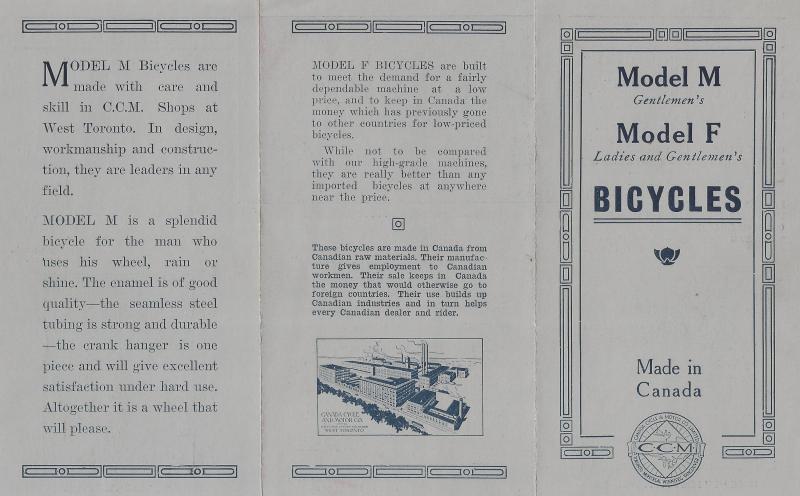
c.1910 CCM Models F and M
I haven't seen these models anywhere except in this brochure. They are economy models as CCM states that they are "not to be compared with our high-grade machines." The date is not stated but there are few clues: 1) The former Lozier factory at West Toronto is shown with additions already constructed so it's not the earliest years. 2) The bikes have fenders so later than 1900, but the front fender stops at the fork crown, so not too late. 3) The tires shown are white, so not later than c.1912 since carbon black was first added to tires in 1912. I would love to know the exact years that CCM first added fenders, then made the front fender pass forward of the fork crown, then switched to dropside fenders. If anyone can shed light on this or knows more about this brochure or models F and M, please post.
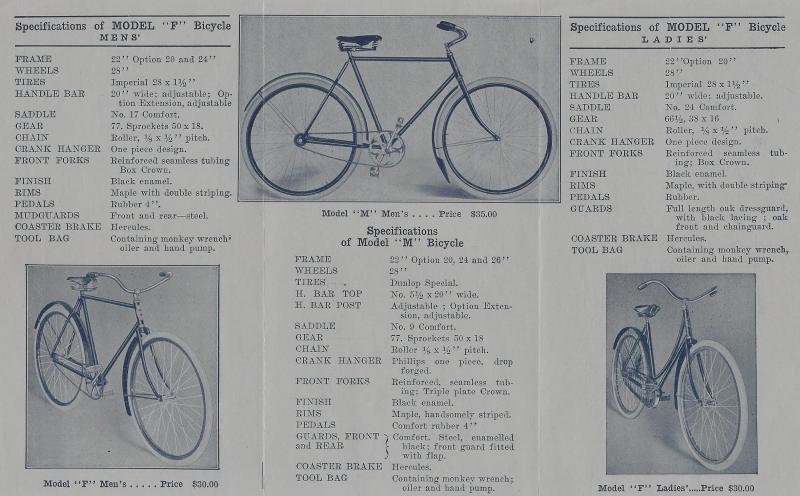
p,s. The front and rear fenders and chainguard on the Ladies Model F are wood!
See previous discussion in thread "Model M, and F?"
Brian I had a bike like the Model M with a head badge that just said ( Pastime) . Beautiful original bike bought it in Thunder bay on a trip back from the west about 20 years .It had that same front fender and one piece crank and wood rims. Sold it to Mario couple of years ago.
I found a reference confirming at least one year of production for the Model F. The attached newspaper advertisement mentions both 1916 and the Model F (at $29). In hindsight, it makes sense that these would have been manufactured during the austerity of the Great War era. Older features such as the fender style and white tires may be attributable to a combination of wartime material shortages and the need to hit the lowest possible price point in order to provide economical transportation for workers involved in the war effort.
I found a reference confirming at least one year of production for the Model F. The attached newspaper advertisement mentions both 1916 and the Model F (at $29). In hindsight, it makes sense that these would have been manufactured during the austerity of the Great War era. Older features such as the fender style and white tires may be attributable to a combination of wartime material shortages and the need to hit the lowest possible price point in order to provide economical transportation for workers involved in the war effort.
Sorry, the advertisement didn't attach to my previous post.